
Running was a significant part of my survival and development. I grew up in the city and running was an integral part of my being chased. People would see me and my survial instinct would kick into match their predator desire to bully me. We run for various reasons and in many situations. I wrote this poem which Char McAllister set to music with other creative elements.
https://youtu.be/AnZ8LF8qfVg?si=8E96zHPJYgz7JYou

We Ran


Long years ago,

We ran as children as a part of play,

In games of tag and keep-away;

On the bases and on the field,

We ran to win and never yield.


We ran for safety, to escape a stranger;

Across the street at the sight of danger;

We ran to let off steam,

For the space to scream,

To a place to dream,

As we release the anger.


We ran for advancement and achievement;

Into and away from trouble and bereavement.

We ran as a metaphor for being alive,

To express the drive,

So, we could survive.


We ran when chased with a weapon or gun;

When threatened by the gang of more than one;

From the jukebox to the club

As the singers sang;

Into the night and into the streets,

We ran to victory and from defeat.

We ran as we ached at our core;

We ran in fright,

When we could fight no more.


We ran to hope

And to separate from others;

We ran to discover and to recover.

We ran from the jowls of hate

And those who wanted to incarcerate.

We ran in sport, on the court, in the alley;

Ran from behind as we staged a rally.

We ran for recognition,

As if on a mission;

To run up the score on the competition;

We ran for it was in us to run;

For it was how, we got things done.


We ran to distance ourselves

From the trader’s whip;

The ruthless profit minded invaders ships

We ran when they severed our relationships.

And took our loved ones to another plantation.

We ran from miscegenation

Without representation,

And segregation

Without explanation.


We ran with Harriet in the Underground.

We ran low, quick, and softly,

So, we could not be found;

When staying was costly.

We ran from the stories being told;

When we were tortured, beaten, and sold.

We ran from the fear of retribution;

From racist biases and institutions.

We run because the evil had begun

And wickedness preceded the setting sun.

We ran as being chased by the men in blue;

With the swiftness of a runaway

Being viewed as revenue;


We ran as a symbol of being safe;

To have the independence,

A chance to escape;

To bring a gold medal to our nation;

To be prominent and dominant

In professional sports;

We ran for office and to avoid the courts.


We ran as Barack and Brandon ran.

We ran as Shirley and Kamala ran.

We ran like Jesse to protect home;

It was the GPS in our chromosomes.

We ran to greet our families;

To love and embrace,

Where home was a comfort place,

Surrounded by God’s living

And saving grace.


We ran to and during our time on Earth.

We ran when mobile after a blessed birth;

We ran to and from our comfort zones;

We ran in groups and ran alone.

We ran into and during the war;

When we did not know what we were fighting for.


We ran, reflecting on moments,

From the recent past.

We ran to clear our minds;

When we were outcasts.

To face the evil in front

And monsters behind,

Toward an unknown future;

Hoping that we would find

An opportunity,

To be as neighbors in community,

Pursuing something,

Not from something,

But forward and toward

Not running away,

And seeking the bounty

Of a brighter day.


Copyright © 2023 Orlando Ceaser
Tag Archives: management
I Am Not Enough

We work together as a team. No person is an island and no person should work in isolation. Most goals are designed to be reached i coordination with others. Additionally, no one should think that they should go through the ordeal on their own, that the objectives should be reached on their own merits.
You are sufficient, as an individual. You are enough within your own right, but when the storms of life are raging and objectives and performance targets must be achieved., you are not enough, nor should you be all that is needed. Involve the team. Involve mentors and coaches and peers. Your growth will accelerate and escalate when you realize and say to yourself, “I am not enough.”
I Am Not Enough
In search of wisdom I think vanity
Will hide the weakness of humanity,
As ego converts the truth into lies.
Misguided in the darkness I confuse
Reality with an elegant ruse;
What I surmise as wisdom is not wise.
Sometimes rejected, the world will mock me
And life will rock me, and friends will shock me,
Reminding me that I am not that tough.
Though I consider myself fully grown;
The evidence is present and has shown;
When I am in need, I am not enough.
I am proud of being spontaneous,
With wit that’s sharp and instantaneous
And eloquent when speaking off the cuff.
I state opinions with precision
Use intellect to discuss religion;
An empty vessel who’s seeking more stuff.
The myth of the person who is self-made.
The courageous one who’s never afraid.
Gregarious in the face of trials.
Despite a vivid personality,
I’m stuck with the truth and the reality
That something is missing behind the smiles.
A goal in life is to be prominent;
To play a role, forceful and dominant;
Confident life, will never call my bluff;
A revelation is inside of me;
Doubt points to an innate deficiency.
I was created for community,
When I am alone, I am not enough.
And when friends have aching hearts filled with grief;
I search for the right words to bring relief,
But silence is all that I can bestow.
The pain seems permanent as I confess,
To being anemic and powerless,
Aware that my incompetence might show.
I often question what I see in me;
An arrogant idol, a deity;
I cannot survive independently;
I finally came to the conclusion,
That life without God is an illusion;
When I was lost and bound; He set me free.
When I deliver all I can provide,
I still fall short of being satisfied;
Love has made me a diamond in the rough.
I bask in the splendor of His brilliance;
I ask the Lord to give me resilience;
Until I’m with Him, I am not enough.
Copyright © 2013 Orlando Ceaser
More information available through books and speaking engagements at
https://www.youtube.com/results?search_query=orlando+ceaser
https://www.amazon.com/s?k=orlando+ceaser&ref=nb_sb_noss
orlandoceaser.com
Leadership Greatness through High Performance Poetry
Innovation demands that we seek different and distinctive ways of stimulating our imaginations. This may be achieved by making an association through poetry, which is not often seen as a companion of business thinking. It is the other soft skill. Hopefully you are open to this additional insight.

High performance poetry is an invaluable vehicle for expressing leadership greatness. This art form emphasizes key elements of achievement and helps to cultivate development for personal and professional gain. “Leadership above the Rim turns out to be a shockingly original collection of poems by Orlando Ceaser, a manager-cum-poet who shares them at team meetings and when his direct reports are promoted.”1 This comment from the Financial Times magazine was an early confirmation of the radical insight found in poetry.
People go to work and school and keep their gifts or their light hidden from their peers. Those with a gift of poetic expression will shy away from putting it on full display due to a perceived negative stigma. However, poets can be important to business. Poets have keenly developed powers of observation, outlook and curiosity that lead to investigation and interpretation. These powers can lead to leadership greatness and high performance if we harness the inherent strength of the language and imagery.
Poets use their senses to gain a better understanding and appreciation of their world. They are introspective, intuitive and deep thinkers who are able to view a situation from many perspectives. They are used to experimenting with different approaches. This can be very helpful in leading people and running a business.
Webster’s Dictionary defines a poet as:
- Gifted in the perception and expression of the beautiful or lyrical
- A creative artist of great imaginative and expressive gifts and special sensitivity to his medium.
The poet has inspirational words for winning, has a vocabulary for victory and can speak effectively against the language of losing. The poet is a panoramic thinker. The poet can use
high performance poetry to link the vision and mission of the organization to desired outcomes. Further, through conversations with their peers, poets can help you sell the vision and the goals of the organization. They can approach a subject, such as business, with the radical insight that could lead to inspiring innovation in ideas, products and services. Their observations and perspectives will add to brainstorming and problem-solving sessions.
High performance poetry focuses on using achievement-oriented language to encourage and celebrate excellence. Dana Gioia, a poet with extensive business experience, is a graduate of Stanford’s Graduate School of Business, and the former Vice president of General Foods. In addition, and quite notably, he is the past Chairman of the National Endowment of the Arts. As he rose up the managerial ranks, he felt he had “an enormous advantage over his colleagues because he had a background in the imagination, in language and in literature.”2
In a business setting, high performance poetry allows people the use of language, through stories and metaphors. Through these stories and metaphors, the poet is able to paint a positive and attainable picture of the company’s vision. On a deeper level, the poetic communications will touch the hearts of people to build trust and engagement.
The poet may be the introvert in the room, deriving their energy from absorbing everything around them and processing it later in the day. They may be the creative ones, who are insightful, observing and analyzing problems from many different perspectives. They may see things that others don’t see, mainly because they are looking. In my book, The Isle of Knowledge, I tell a story about my friend Buttons from my childhood. During our walks around the West side of Chicago, Buttons was always finding money and other things of value. I tried to match his skill, but with little success. His secret was that he was always looking down and therefore, had a greater opportunity to find things. He was looking where the treasure was located. The poet is always looking for treasure in the places where they reside.
They are always observing, always using their senses, always connected and involved in the world around them. Identify the poets in your midst. Whenever possible, be sure to include them on cross-functional teams and you will be rewarded with a higher performing team that will exceed your expectations.
Another quality that poets bring to the table is a love for experimentation. Their use of metaphors, similes, allegories and hyperbole are some of the ways in which they explore different portrayals of the current reality. At work, they use the same talent to experiment with different solutions, searching for more than one right answer, to improve the quality of decision-making.
It is beneficial to know the poets in your organization and to encourage their expressions of creativity. When these individuals and others focus on high performance poetry, they will leverage their talent to help you utilize and maximize the innate abilities within the team.
You may have heard that poetry and business do not go together. However, this perception may hinder people from exploring and experimenting with a valuable perspective. The high-performance poetry featured in this book will help employees examine its use for achieving their goals. This perspective, if harnessed, will improve the culture within your business in a myriad of ways.
Max DePree, former CEO of the Herman Miller furniture company, tells a story in his book Leadership is an Art, which is a part of the Herman Miller company history. It is a story about a millwright. “In the furniture industry of the 1920’s the machines of most factories were not run by electric motors, but by pulleys from a central drive shaft. The central drive shaft was run by the steam engine. The steam engine got its steam from the boiler. The boiler, in our case, got its fuel from the sawdust and other waste coming out of the machine room – a beautiful cycle. The millwright was the person who oversaw that cycle and on whom the entire activity of the operation depended. He was a key person. One day the millwright died.”
One day the founder of Herman Miller went to the house of the recently deceased millwright. While visiting his home, the widow asked if the young manager would mind if she read some poetry aloud. After listening to her read beautiful poetry, he asked the author of the work. She replied that it was her husband, the millwright. For years the young manager and others at Herman Miller who were apprised of the story wondered,” was he a poet who did millwright’s work, or was he a millwright who wrote poetry?”3
High performance poetry will start you on the path of discovering more about the people in your group or organization. It will help you to explore various aspects of the work experience. It will illuminate and elucidate human motivation and the desire to innovation on an even grander scale. This greater understanding of people will be instrumental to the team’s commitment to exceeding expectations.
Max Dupree goes on to say, “understanding and accepting diversity enables us to see that each of us is needed. It also enables us to begin to think about being abandoned to the strengths of others, of admitting that we cannot know nor do everything. This simple act of recognizing diversity in corporate life helps us to connect the great variety of gifts that people bring to the work and service of the organization.”4 Leadership greatness can be achieved through many avenues. Achieving leadership greatness through high performance poetry is another way to experience the variety and versatility present within your team. I trust that this book will assist you in extracting and multiplying the greatness around you and within you.
TABLE OF CONTENTS
Preface
Acknowledgments
Adapting
An Ancestor’s Apprentice
Ask (Acquire Selling Knowledge)*
Athletes Leading As Role Models – (ALARM™)
Be humble as you hustle
Be strong to the finish
Championship Thinking
Circle of Excellence*
Coming Through in The Clutch
Confessions of a Corporate Climber
Do You Ever Want to Spin with Me?
Follow through
Front-line Leadership*
He Makes Leaders for a Living*
Habits and Hustle
Hustle
I Am Not the One
I am in sales
I Am the Good
Faith Effort
Imagine a Company Anarchy On Demand
Inertia
Intellect Fulfilled is an Awesome Thing
It Is Time
Keep the Ones We Love Alive (Drive
Defensively)
Last Will and Testament
Leadership in a turbulent Season
Leadership is Allowed
Let them Lead
Make your own good news
My time and my touch
Obstacles
Passion makes you cry
Paying your dues
Peace
Quest for meaning*
Quotas and forecasts*
She is not too old
Someone you may never know
Stronger together
Structure
The Box
The Hunger
The Lady and her Legacy
The Leader Within
The Mark*
The Old Guard and the New Way
The Third Quarter of Life
The Temple of Wasted Time*
The Unabridged Life*
The Un-led
The Year in Review
Uncertainty
Universal Coach
We are committed
What will you be known for?*
When I say diversity, What do you hear?*
When we announced the merger*
Where is the diversity?
Whether Report
You have been chosen to lead*
About the Author— Orlando Ceaser
https://www.amazon.com/s?k=orlando+ceaser&ref=nb_sb_noss
https://www.amazon.com/s?k=orlando+ceaser&ref=nb_sb_noss
https://www.amazon.com/s?k=orlando+ceaser&ref=nb_sb_noss
31 Day Leadership Gauntlet – Day 31 – Shared Greatness – The Epic Leader

Epic means larger-than-life, on a grander scale, and above and beyond the ordinary. Epic is the magnitude found in a Cecil B. DeMille blockbuster movie with enormous sets, panoramic views and large crowds of people. They are like movies envisioned by Steven Spielberg, George Lucas, JJ Abrams and James Cameron.
When I apply epic to leadership, I want you to think of leadership that is scalable, based on the situation, circumstances, and demands of the organization and needs of the people. The Epic Leader has the skills, abilities, talent and capacities discussed over the 31 Day Leadership Gauntlet. They produce gargantuan goals and vision, with the courage to be empathetic, resilient and able to adapt style, structure and emotions to be empathetic and emotionally intelligent.
The Epic Leader is in the mind of the beholder; the followers are made bolder because of their ability to shoulder the burdens together. They are effective in working as a team. Size matters to the follower because the Epic Leader is big enough to coach, mentor and lead where leadership is required. The followers feel they can trust them because of their reputation and trustworthy interactions. The Epic Leader also, has a grander vision, a sense of purpose with their egos intact as they develop their people to have the curiosity, strength through interdependence in turbulent times, with the spirituality and curiosity to be creative and able to overcome fear.
The Epic Leader is humble and their humility will not allow them to say, “I’ve got this or I am enough,” but you know it is true from the leadership versatility they exhibit and the leadership power that is granted to them by their followers. The Epic Leader makes others into epic followers. The followers feel like somebody. They feel they are going somewhere and to ready to do something great.
The Epic Leader creates impact players, who are students of the game, in the right role, powered by a dream and who are always created with high standards. They are continuous learners. They are familiar with the work and leadership practices of Gen. Colin Powell. Their people have grit. It is the grit that is talked about by Angela Duckworth and defined as passion and perseverance. The Epic Leader wants to take their people and organizations from good to great as Jim Collins discussed in his book. They have the vulnerability that Brené Brown writes, speaks and researches. They are equipped with the emotional intelligence referred to by Daniel Goleman and Travis Bradberry and Jean Greaves. They understand the Givers and Takers as outlined by Adam Grant and Start with Why according to Simon Sinek, and the strengths of their people as championed by Marcus Buckingham.
The Epic Leader ensures their followers will have the appropriate mindset, therefore a they put forth the right effort and preparation. They work to be culturally competent from reading Malcolm Gladwell in his books Blink, the Outsider and Talking to strangers. The epic leader understands unconscious bias through the work of Sondra Thiederman, Making Diversity Work, and the research of Mahzarin R. Babaji and Anthony G. Greenwald summarize in their book about hidden biases, Blindspot. He took the Intrinsic Association Test (IAT) at https://implicit.harvard.edu/implicit/.
You do not start out saying you want to be an Epic Leader. They would not be the mindset of a person focused on humility. It is a distinction bestowed upon you by those who look up to you and learn from you. You have been a breath of fresh air on their development and they realized how you have improved their environment and enriched their lives.
May you unlock your leadership greatness and become an Epic Leader. May you continue to magnify and multiply; magnify your impact and spread your reach to positively influence more people. I am hopeful that your 31 Day Leadership Gauntlet journey was a mind stimulating, heart inspiring and faith affirming adventure into becoming an Epic leader. May your Epic followers be instrumental in helping you to change the world
The Epic Leader
The Epic Leader surveys the terrain
And ponders the strategy, yet remains
True to the mission; put their people first,
As they seek the best and plan for the worst.
The Epic Leader ascends and descends;
Adjusts and gains trust as they comprehend
The magnitude of the crisis at hand,
To manage chaos, while taking a stand.
Their mission is clear, their vision intact
They may have charisma that will attract,
Or humility and a strength of will
To lead the people with dreams to fulfill.
The Epic Leader has the confidence
Of someone emboldened by competence
And guided by a mission and vision;
A philosophy that shapes decisions.
The Epic Leader walks across the stage;
There is alignment, as people engage
In the moment, confidence exuded,
As people feel affirmed and included.
The rivals don’t always attack at dawn
And competitors charge with weapons drawn.
They have monumental ability
To focus on mental agility.
The Epic Leader manages to rise
To the encounter, but look in their eyes,
For there lies the energy on which they feed;
As power flows from what the people need.
The Epic Leader prepares and repairs.
To show us that leadership shares and cares.
They can get by on a wing and a prayer.
Resourceful, vulnerable, self-aware,
Emotionally wise and capable,
When change is truly inescapable;
Uncertainty is a root of the norm,
They will translate, transcend, as they transform.
The Epic Leader advises their crew
And wisely considers their points of view;
With seafaring credentials to perform;
Courageously at the height of the storm.
Copyright © 2019 Orlando Ceaser
Personal Reflections
-
What can you do to become a bigger leader?
-
How can you enrich the lives of those I influence?
-
What you do today to make person I encounter feel important?
-
What are my strengths and weaknesses in interacting, influencing and leading people?
-
What are my blind spots, as it relates to understanding people were not like me?
-
How do I gather feedback on how others see me?
-
Who are the people I should select?
More leadership information at OrlandoCeaser.com
The ‘O’ Zone Blog: myozonelayer.com
Youtube: https://www.youtube.com/results?search_query=orlando+ceaser
31 Day Leadership Gauntlet – Day 30 – Mediocrity

Step out in excellence. Individuals and organizations mired in mediocrity failed to reach their potential, fall short of meeting customer expectations and do not achieve the best. Excellence demands dedication, creativity, innovation, cooperation and coordination between teams and departments. The analogy of the impact player works to explain the high bar necessary in today’s environment.
Impact players are peak performers, game changers and difference makers. They are recognized as the superstars in our organizations, schools, communities and families. They are the stars on the team, the leaders that people respect and emulate. The greater the number of impact player available, the more it accelerates and creates a critical mass necessary to reach your goals.
Organizations cannot afford wholesale mediocrity within their ranks. They must select the best talent, develop the best talent and retain the best talent. Just imagine how productive we would be if we increased the number of impact players within our group. They would realize that they are in need group of performers. Their presence would have a synergistic effect on the group. Employees would be more engaged and productive; students would achieve higher grades and test results. Businesses would consistently reach their productivity and financial targets.
There are 10 principles observed in impact players from academia, athletics, entertainment and business. This is not an exhaustive list and all of them may not be present in everyone.
Impact Player
-
A Natural Fit for the Role
-
Excels in areas where their talents, skills and abilities are fully utilized
-
Powered by a Dream
-
Driven by ambitious and stretch goals to fulfill potential and purpose
-
A Student of the Game
-
Continuously learning information about their field and related areas
-
Fundamentally Sound
-
Masters the basics through practice and mental rehearsal
-
Sets High Standards
-
Fully engaged to beat their personal best, which exceed job requirements
-
Creative Expression
-
Develops new ways to improve work and play, with a style of their own
-
Passionate Execution
-
Aggressively implements plans and checklists to stay on tasks
-
Lead by Example
-
Personal actions match their words
-
Make Others Better
-
Elevates team performance by teaching and challenging the effort and results of peers
-
Serve Others
-
Willingness to share talent and resources – give back – pay forward
Copyright © 2007 Orlando Ceaser
Please review the Impact Player poem. How do you align with the principles?
The Impact Player
He was not always an Impact Player;
A natural fit at his position.
He had to struggle through many layers
Of resistance from the competition.
He worked to get in the best condition;
While mastering all the fundamentals;
Setting high standards, filled with ambition;
Knowing success is not accidental.
She was not always an Impact Player;
A change agent, when she first reached the field.
She started thinking as a bricklayer,
Then felt she had a cathedral to build.
The game slows down the better we produce
Always passionate in execution;
Powered by a dream that’s put to good use,
To spark a leadership revolution.
We are striving to be Impact Players;
Always being creative in the role;
Tie breakers, the movers and shakers;
Willing to work hard and pay the toll.
For we do the hard work and we achieve
Superstar status that we can savor.
We are students of the game and believe
That serving others has brought us favor.
We are striving to be Impact Players;
No one questions our talent or drive.
As armored knights, we are dragon slayers,
From medieval times to this moment,
We thrive.
Difference makers willing to trample
The forces of mediocrity;
Who are always leading by example,
And making others better constantly.
We’re decisive without hesitation
From these principles we will not waiver;
Our research and investigations,
Fill us with courage and make us braver.
Copyright © 2017 Orlando Ceaser
Personal Reflections
-
Review the 10 principles
-
What are your strengths and where do you need to fortify your efforts?
-
Pick a strength and an area needing improvement and focus on them today.
-
Review the book Unlock Your Leadership Greatness by Orlando Ceaser.
-
Books are available at amazon.com and orlandoceaser.com
More leadership information at OrlandoCeaser.com
The ‘O’ Zone Blog: myozonelayer.com
Youtube: https://www.youtube.com/results?search_query=orlando+ceaser
31 Day Leadership Gauntlet – Day 28 – Courage
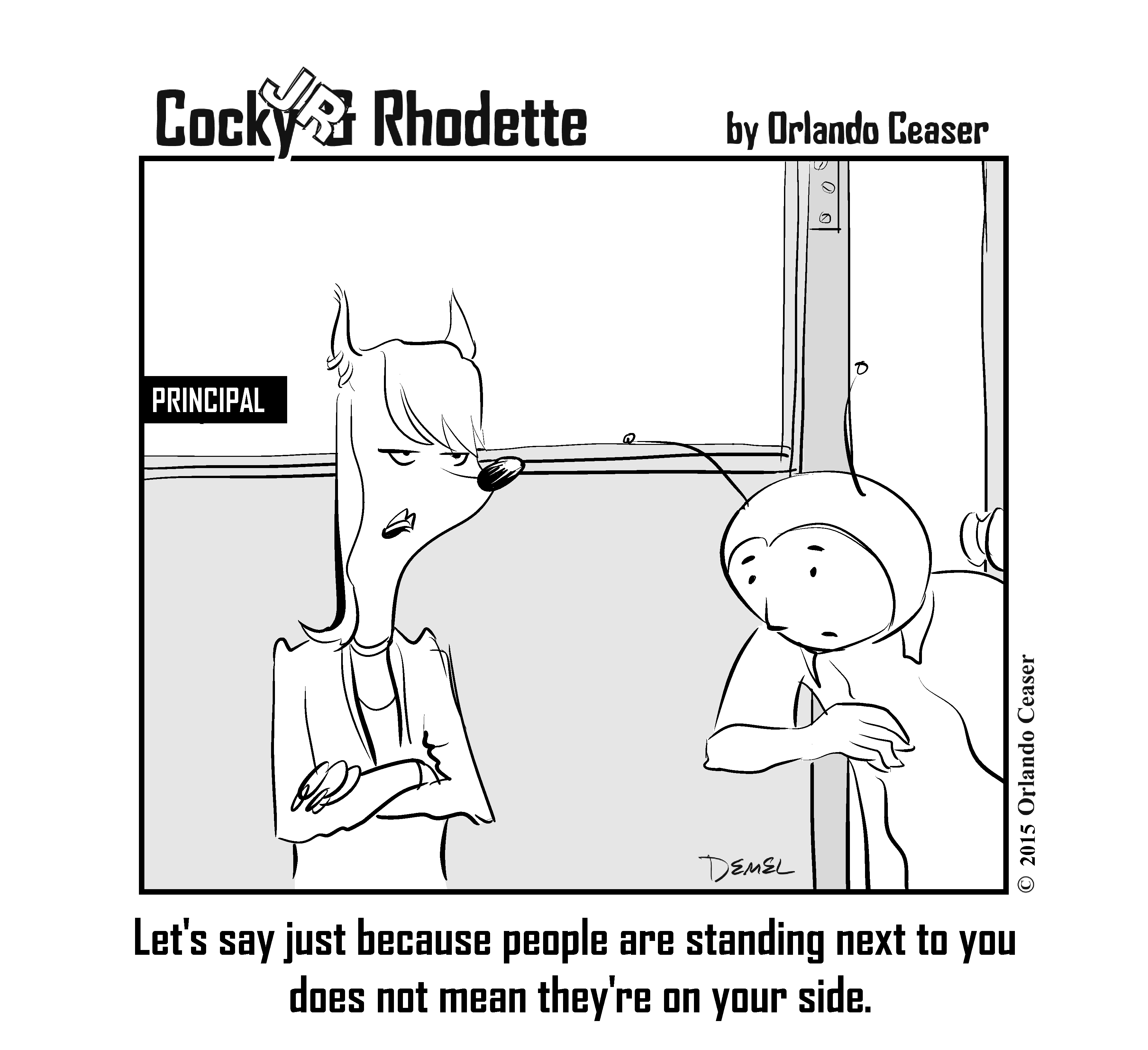
Courage is not the absence of fear but proceeding in its presence. Courage is not necessarily acts of bravery against a life-threatening adversary. Courage can be defined as a situation where you are prompted to rise, step forward and risk something, to benefit yourself or others. You must be willing to go to the front of the line to demonstrate bravery. Therefore, Courage is not always about us. It is performed as a practice, a template, a role model to benefit others.
There are instances during a day or a season when you are being watched by your family, group, team, peers and community. How will you respond in difficult situations? When a fear generating dilemma appears, there is a courage stimulating response that is required. How will you respond? Will you be brave?
When an intimidating moment appears in the leadership gauntlet, it is a perfect opportunity to stand up, show courage and be on the front line and take the lead with your people. What does courage look like? It varies with the demand and the scale of the crisis. Courage could mean standing up for them when they are bullied by peers, strangers or management. It could be when unfair assaults on their skills, reputation and performance occurs during a meeting or performance review. Courage could occur during periods of uncertainty when patience and guidance are needed to help someone make it through a frightening predicament.
Courage could also manifest itself in the ability to show weakness, vulnerability, empathy and compassion. Courage provides the opportunity to let down your guard and connect with people. Look for opportunities to show people that you are on their side, that you can identify with them and fight with them. You can roll up your sleeves, join the fight and work with them.
Front-line Leadership
https://youtu.be/bhB6r02clVk
When in the clenches or against the ropes
Or in the trenches where it’s hard to cope;
When in the battle to succeed,
On the front line is where you lead.
To make decisions cowards fear to broach,
You’re on the field as player and coach;
To give followers what they need,
On the front line is where you lead.
You are the traction on a slippery slope.
Your plans and action are symbols of hope.
Momentum grows by word and deed,
On the front line is where you lead.
So, by example you show them the way.
You’ve rolled up your sleeves and joined in the fray.
For in the battle to succeed,
On the front line is where you lead.
Reprinted with permission from Teach the Children to Dance
Copyright © 2001 Orlando Ceaser
Personal Reflections
-
How have you taken the lead to show someone that you are on their side?
-
How can you demonstrate to someone that you have them back?
-
Describe a situation when you weren’t there when someone needed you?
-
Where do you need to show courage more consistently?
-
Describe a time when you went to bat for someone.
-
What situations are more difficult for you to show courage?
-
What is the worst thing that can happen in most situations?
-
Does the worst thing that can happen, consistently happen?
More leadership information at OrlandoCeaser.com
The ‘O’ Zone Blog: myozonelayer.com
YouTube: https://www.youtube.com/results?search_query=orlando+ceaser
31 Day Leadership Gauntlet – Day 26 – Arrogance

Pharmaceutical sales representatives are familiar with the customer referred to as the “Know-it-all doctor.” The connotation was not just a physician who knew everything, but an individual who was arrogant and spoke to people in a condescending manner. There was a feeling of superiority which made it difficult to deal with others. The air of arrogance made it hard to be effective as a leader. The person who knows everything and feels no one can teach them anything, is difficult to talk to and may not be open to receiving important information.
Many times, we use arrogance to cover-up for an insecurity. We don’t want people to recognize a deficiency in some aspect of our behavior and we do not wish to be challenged. On other occasions we do not wish to be questioned because we feel we are better than everyone. Humility is not a skill that makes them comfortable.
When you make the commitment to move beyond arrogance, it must be done with authenticity. Here is an example of what not to do. A manager received feedback that addressed his arrogance of feeling he was always right. It revealed that he did not listen to his direct reports, did not solicit their comments, but when they were given, he would not value or use them. It was described as follows.
He would adopt the stance of a good listener, someone concerned about his staff’s point of view. He would lean forward, establish direct eye contact and use transitional phrases such as, go on, is that so, I did not know that and tell me more. At the conclusion, he would thank them for their courage and valuable input. He would close by saying, he was glad to have the opportunity to know how they felt, but he would continue with his idea and the original plan. His subordinates were confused and wondered why ask for their opinions and bother going through such a pointless exercise. His actions curtailed their ideas and reduced trust. Why give comments if they did not matter?
Personalize your actions to prevent arrogant behavior by focusing on these areas.
-
Beware of arrogant tendencies.
-
Listen to others.
-
Involve others in your decision making
-
Include their ideas to show you value their suggestions
-
Do not respond in a threatening manner when you don’t like what you hear
People do not wish to support the arrogant person. They may withhold information. They may watch someone go down the wrong path and remain silent. They will surely not give them their best effort. They will do just enough to keep their jobs. They will engage in OMDB (Over My Dead Body) behavior and thinking. Review the poem below and reflect on it and discuss with others.
Many of us may be blind to our arrogant ways. In order to change we must be open to critical remarks without taking them personally. Act as if people may feel you are arrogant, and request insight. A manager read the poem below and was offended, for it struck a nerve. He was offended by the content because he thought I was speaking to him. However, members of his staff contacted me and confirmed that it was an accurate depiction of his arrogant leadership style. Let’s act as if this might be the case. Remove personal anxiety and allow people the opportunity to give you comments that are good for everyone.
You Might Not Be A Leader
You may have been a superstar in sales;
An individual who never fails,
But, if you can’t ensure the group prevails,
You might not be a leader.
If vision is absent and no one cares,
If knowledge is power, you will not share;
If you look behind you and no one’s there;
You might not be a leader.
If you did not earn stripes or pay your dues;
If faced with decisions, you fail to choose;
If people ask for help and you refuse,
You might not be a leader.
A passive aggressive management style,
If your deficiencies are in denial;
Too selfish to journey the extra mile,
You might not be a leader.
When seen as a puppet of management,
To throw teammates under the bus is meant,
As a symbol of brewing discontent,
You might not be a leader.
If you lack trust and thought to be lying
And giving feedback is terrifying,
Here is a fact that’s not worth denying,
You might not be a leader.
You feel emotional intelligence
Are soft skills without any relevance,
And being vulnerable makes no sense,
You might not be a leader.
If given a job that’s over your head;
If you cannot reach them, the word will spread,
If you cannot teach them, it will be said,
You might not be a leader.
Copyright © 2019 Orlando Ceaser
Personal Reflections
-
Do you solicit input from others?
-
Do you use ideas presented by your staff?
-
Do you speak down to others when they state their opinions?
-
Do you involve others in your decision making?
-
Review stanzas and lines that relate to arrogance in self and others.
-
Do people come to you for advice on a frequent basis?
-
How do you receive feedback on your impact?
-
Does your impact match your intent?
More leadership information at OrlandoCeaser.com
The ‘O’ Zone Blog: myozonelayer.com
YouTube: https://www.youtube.com/results?search_query=orlando+ceaser
31 Day Leadership Gauntlet – Day 24 – Curiosity

As children we were told that curiosity killed the cat, but our response was always, but satisfaction brought them back. On one hand we accused curious people of being nosy. However, curiosity was a good thing when you were called precocious. Curiosity is a critical characteristic to possess. Cultivating the habit of being curious is a precursor to creativity and innovation. Employees who constantly approach products and practices with a curiosity lens, are an asset to you, for they will develop ideas to improve your organization.
A corporate culture saturated with curiosity is vibrant and expanding. These individuals examine the status quo to understand its origins, as they look for ways to improve design and execution to increase overall quality. One of the tools of the curious is an enhanced ability to ask questions. They know that the right question will provide them with the information they need to understand and improve overall performance. Why have we always done process, this way? Many professions depend on the ability to ask questions; lawyers, salespeople, counselors, coaches, teachers, parents, years, psychiatrists and lawyers.
Curiosity paired with questioning skills will uncover information needed in an environment of continuous improvement. Think of ways that you could be more curious and set up a process to establish a curiosity infused workplace. Have fun with it because it will be exhilarating.
A.S.K.
(Acquire Selling Knowledge)
We ask for trouble;
To be there on the double;
For affection, for directions,
For a dime.
We ask for the weather;
The shoes are they leather?
Was I blatant?
What’s your statement?
What’s the time?
Yet this three-letter word
Is forgotten, deferred,
By the greatest inquisitors of all.
We speak from our chair
With articulate flair,
But with rarely a question in the call.
In eloquent fashion
We probe with a passion,
For a date,
For a dollar,
For our due.
We ask for a dance,
A third second chance,
For advice,
For a price,
For a clue.
But we won’t inquire
To learn what inspires,
A customer to buy;
Their need, reason,
The why.
They are willing to share,
Who, what, when, how and where,
If we ask and listen to their reply.
Copyright © 2001 Orlando Ceaser
Reprinted from Teach the Children to Dance
Personal Reflections
-
Are you creative?
-
How do you cultivate a climate of curiosity?
-
Since curiosity and creativity are often linked, what are you doing to grow either skill, personally or professionally?
-
Are there certain people in your organization who are naturally curious?
-
Have you developed the art of asking questions to seek information?
-
Can you identify with the sentiment stated in the Ask poem above?
-
What can you do to ensure that more questions are asked in presentations and conversations?
-
Have you informed your people about the importance of asking the right questions?
-
What kind of training or resources do you provide in the area of curiosity and asking questions?
More leadership information at OrlandoCeaser.com.
The ‘O’ Zone Blog: myozonelayer.com
YouTube:
https://www.youtube.com/results?search_query=orlando+ceaser
31 Day Leadership Gauntlet – Day 22 – Relapse

Developing new skills requires a change management mentality. New skills must be practiced and reinforced over time, with continuous application. The more powerful and experiential the training with total immersion in the new skills, will result in new behaviors that are sustainable.
However, you must deal with inertia, which is resistance to change. Secondly you must contend with the temptation to resort to previous behaviors in the face of difficulty. Observation and experience reveal that in a crisis, if the new skills are not firmly embedded in the subconscious, we revert to previous behavior. We retreat to what is known, comfortable and firmly established. We may discard the new information, new practices for the comfortable behaviors of the past.
If change is not fully incorporated into your rote memory or natural rhythms, you may easily relapse. Therefore, it is important to have powerful implementation procedures that are rapidly reinforced repetition to replace the memorized subconscious behaviors.
Additionally, you must firmly believe in your people and adhere to your leadership pledge to their success. In the heat of battle, turmoil or a crisis, remember that your long-term effectiveness as a leader may hinge upon the following. Your ability to be steady, call while refusing to relapse and abandoning new programs and practices for the old way of doing things.
Leadership Pledge
To value and respect you
For your accomplishments each year;
Reward your focus on the bottom line,
Elicit feedback and design
Improvements to work conditions
And ways to fight the competition.
To give clear goals, not good intentions;
Form tactics that defy convention
And set a course for the clients needs,
Sometimes at warp or breakneck speeds;
But always mindful as we advance
To keep egos intact and skills enhanced.
To value and respect you
For loyalty and candor,
For personal leadership modeled
When understaffed and at full throttle,
To praise you when change is prominent,
Receptive when stress is dominant;
And listen actively to your voice,
For you have freedoms,
You’re here by choice.
Copyright © 2013 Orlando Ceaser
Reprinted from Leadership Above the Rim
Personal Reflections
-
How do you demonstrate to others that you believe and trust them?
-
What new programs have you put in place to improve the climate in your workplace?
-
Think of behavior changes successfully implemented and what you did to make them work.
-
Give examples of old habits that you have successfully replaced.
-
What do you do to prevent yourself from relapsing into old habits? Give an example, personal or professional.
-
Review information on change management to strengthen the intellectual and logical justification for your new practices.
-
The element of surprise is a strong reason for reflex behavior. When you are caught off guard you may tend to relapse into old ways of thinking.
-
Anticipation will help you stay with your new skills and let the old habits stay in the past.
More leadership information at OrlandoCeaser.com.
The ‘O’ Zone Blog: myozonelayer.com
YouTube:
https://www.youtube.com/results?search_query=orlando+ceaser
31 Day Leadership Gauntlet – Day 20 – Adaptation

Survival is our strongest need, according to many philosophers. Abraham Maslow lists it among our basic needs, which we must fulfill before we move on to satisfying other needs on our list of priorities. Survival is dependent upon making the necessary adjustments to changes in our environment. We must include these adjustments, as a part of our evolving skills.
The quality of survival is linked to our adaptation ability, therefore our success in making adjustment to competitors in the marketplace or whatever environment surrounds us. Our objective is to aim higher , rather than barely making it. We do not want to do just enough to get by. We want to thrive and prosper. A standard of living above the baseline of existence is a desirable goal. But to achieve this enhanced quality of life, we must make continuous adjustments to our behavior.
The poem Adaptation addresses the adjustments we need to make educationally, relationally and professionally to improve our prospects for higher earning power and fulfillment of purpose. Charles Darwin wrote about the survival of the fittest and that holds true in the development of species and in developing a personal profile competitive enough to make it in the business world. Adaptation encourages the survival of the fit; those who take the time and make the effort to anticipate challenges and respond to change. Only progress is satisfactory. Movement is essential to momentum.
Adaptation
This is what the world has come to,
If you’re lost, you’re left behind.
So, you need something they can’t
Take from you,
A treasure stored within your mind.
Survival has a new battle cry,
“Learn to adapt or learn to die.”
The work is becoming more difficult;
Best practices rapidly obsolete;
The business that focuses on results
Lacks tolerance for those who can’t compete.
You try to fail if you fail to try,
“Learn to adapt or learn to die.”
Distractions are greater, and times are hard,
And there are numerous reasons to quit.
Your peers may entice you to disregard
Being versatile and mentally fit.
I caution you to look them in the eye
And say learn to adapt or die.
Innovation is a survival tool;
Flexibility a requirement.
Those who survive and ultimately rule
Always adjust to their environment.
Industries and species that don’t comply,
“Learn to adapt or learn to die.”
There are many reasons to not achieve
But you owe it to yourself to attempt
To climb the mountain, but you must believe
The goal that was not captured was not dreamt.
Distinction or extinction will apply,
“Learn to adapt or learn to die.”
Copyright © 2011 Orlando Ceaser
Personal Reflections
-
How have you changed in the last year?
-
If someone has not seen you in several years, what change would they notice?
-
How has your business environment changed?
-
What adjustments have you made or must make to keep up with new demands in your profession?
-
How have you adapted to the technological demands of your profession?
-
How do you stay on top of matters that require your attention?
-
Alvin Toffler mentioned that technology has accelerated in this world of high tech, but we have not changed that much socially, in something he calls high touch. How are you socially keeping up with the times?
-
How are you adapting to find time for the ones you love?
More leadership information at OrlandoCeaser.com.
 Leadership for the Soul